Iconic 1920s French Art Deco Marble & Onyx Bell-Striking Mantel Clock – Borzoi Hound
£650.00
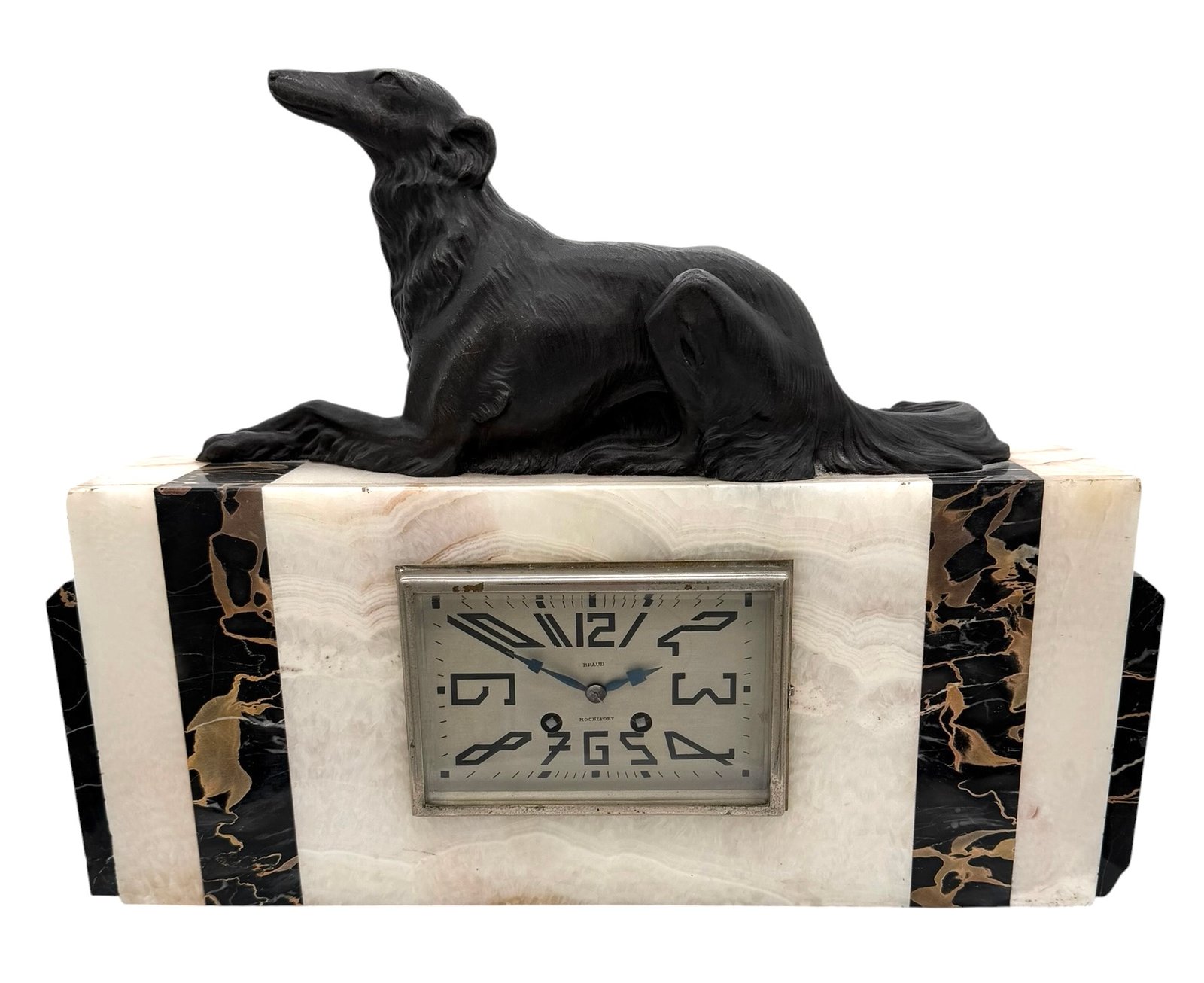
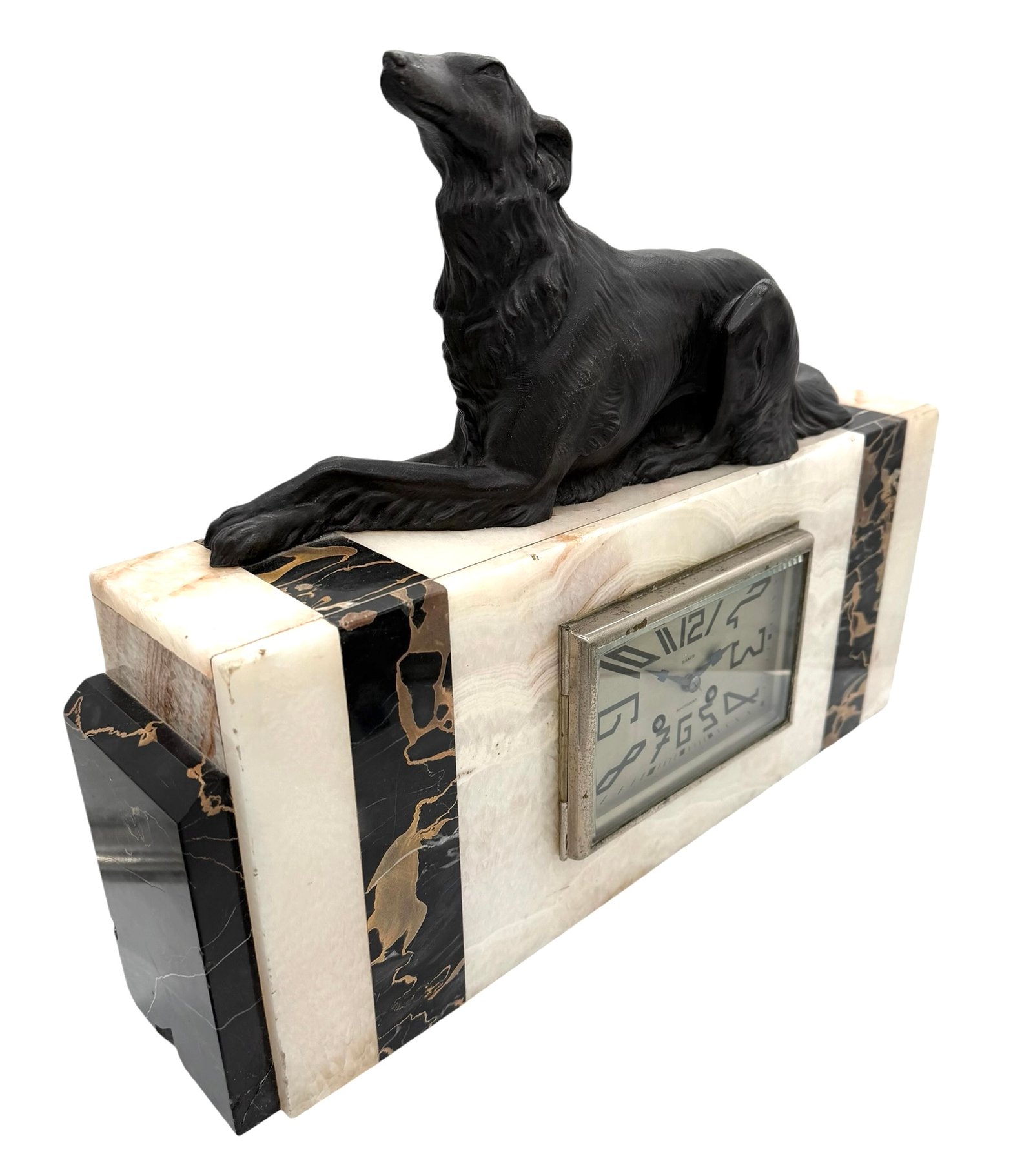
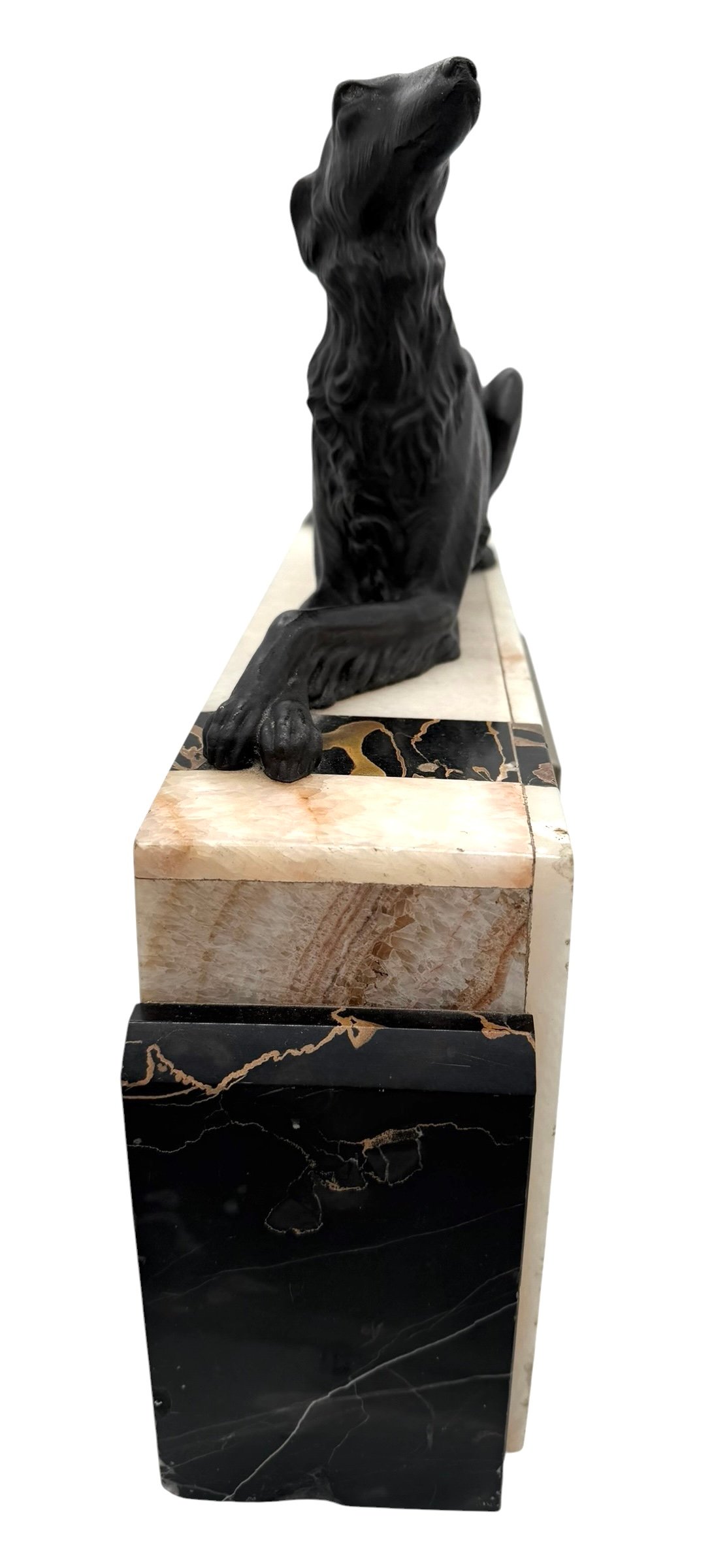
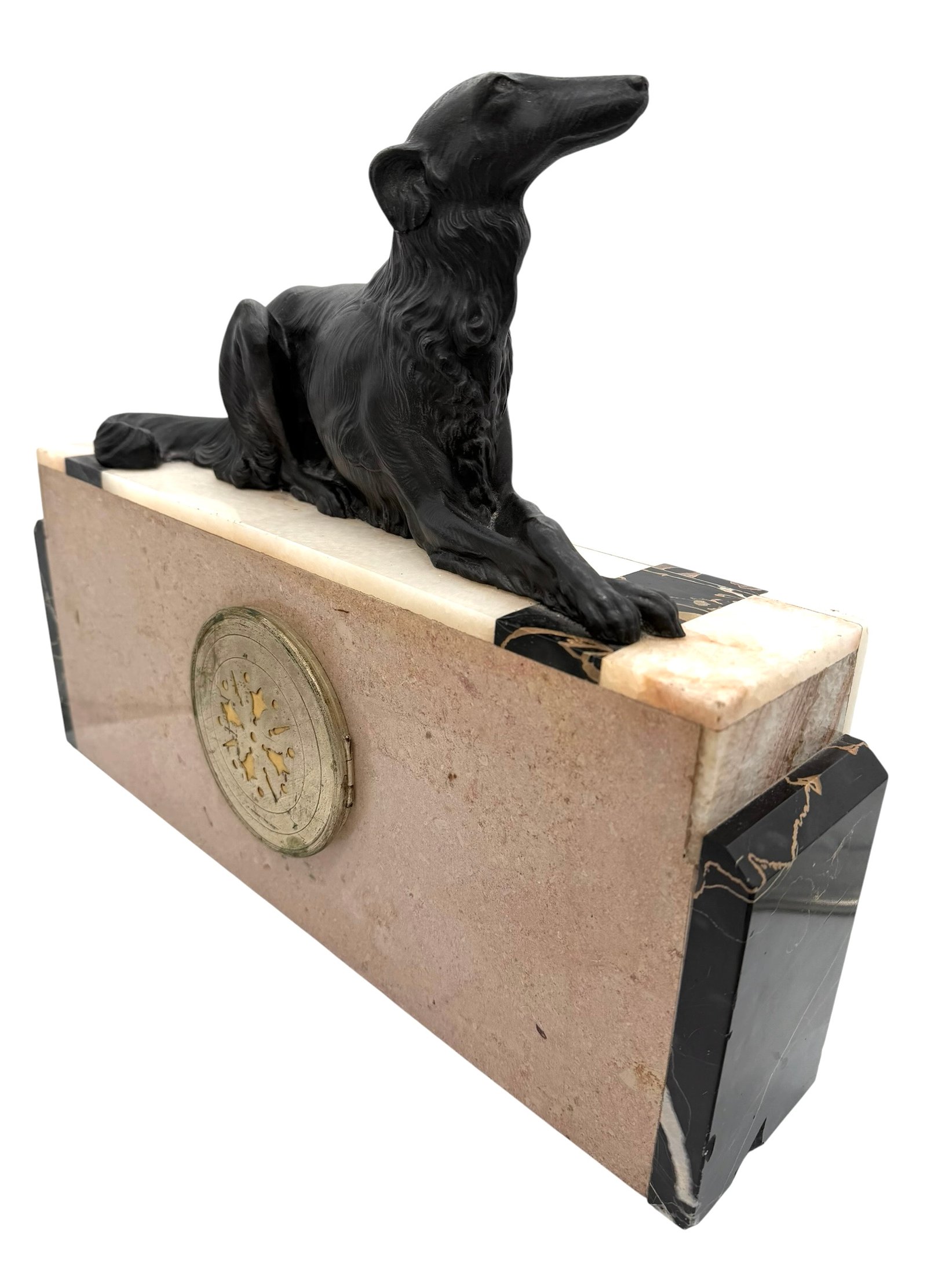
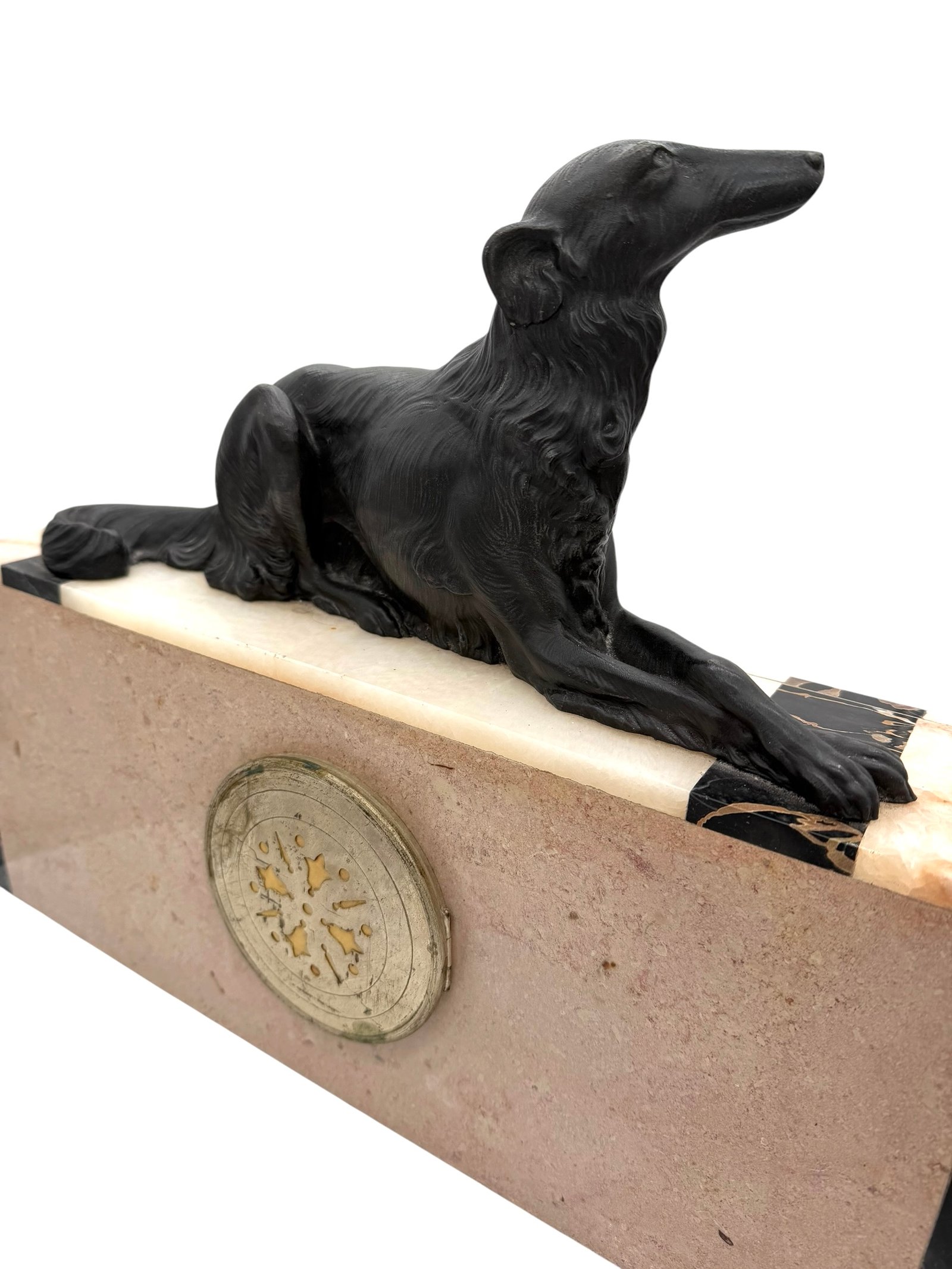
A truly iconic and statement-making 1920s French Art Deco bell-striking mantel clock, crowned by a superbly sculpted reclining Borzoi hound and set into a striking cream onyx and black-and-gold marble case.
Description
Iconic 1920s French Art Deco Marble & Onyx Bell-Striking Mantel Clock – Borzoi Hound
A truly iconic and statement-making 1920s French Art Deco bell-striking mantel clock, crowned by a superbly sculpted reclining Borzoi hound and set into a striking cream onyx and black-and-gold marble case.
The Sculpture & Case
Capturing the very essence of 1920s French Art Deco glamour, the top of this substantial timepiece features a large, finely detailed reclining Borzoi (Russian Wolfhound) finished in a rich dark patinated metal. Revered during the Art Deco era for its sleek, aristocratic silhouette and feathered coat, the hound rests gracefully atop a bold architectural plinth. The case is crafted from glowing cream-and-honey banded onyx, dramatically contrasted by vertical inlays of black and gold-veined Portoro-style marble and stepped black marble side wings.
The Dial
Set flush into a silvered rectangular bezel is an extraordinary, period-authentic silvered Art Deco dial. It showcases bold, geometric “Cubist” stylised Arabic numerals, a crisp outer railway minute track, and original blued-steel modernist hands. The dial is signed by the original French retailer “BRIAUD / MONTLUÇON”.
The Movement
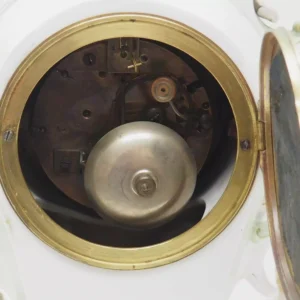
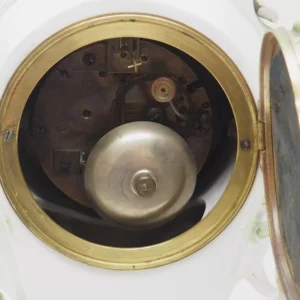
- Duration: High-grade 8-day French mechanical movement, accessed via a decorative pierced brass rear door.
- Chime: Strikes the hours and half-hours on a crisp, resonant internal bell.
- Condition & Accessories: Just serviced and in good working order, keeping good time. Supplied complete with its pendulum and winding key.
Dimensions
- Height: 36 cm
- Width: 46 cm
- Depth: 10 cm
An unmistakable centrepiece of 1920s French design that commands attention on any mantelpiece, sideboard, or console table. Please examine all photographs closely as they form an important part of the description.