Your Cart

Victorian Clock Collecting

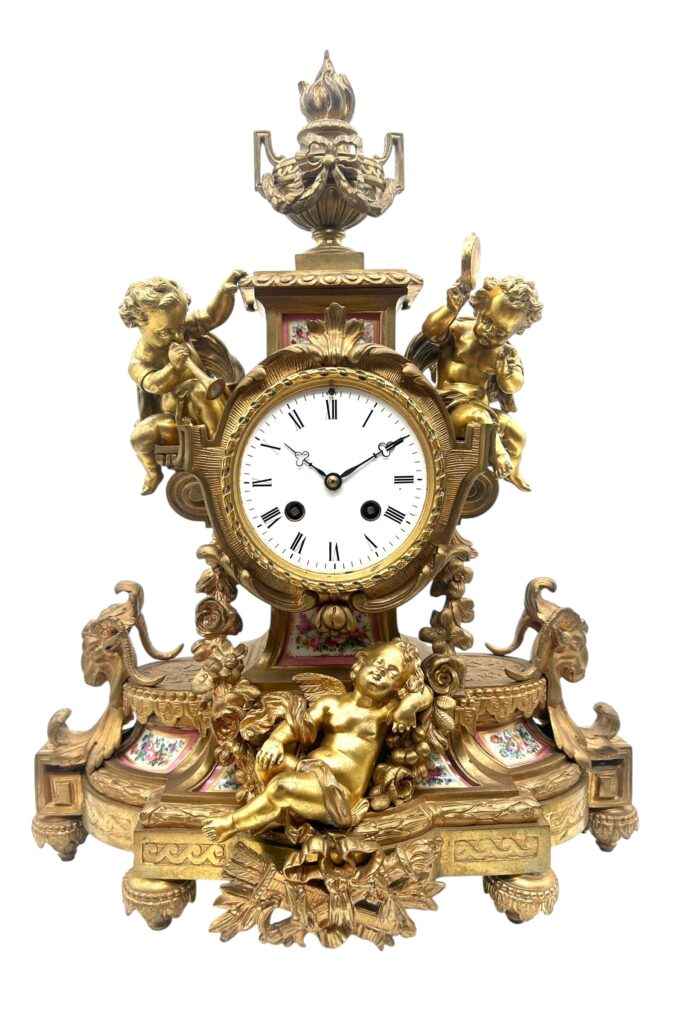
Cherub Figural Ormolu Clock

Share This Post

The Victorian era (1837–1901) was a golden age for clockmaking. Driven by the Industrial Revolution, clocks transformed from luxury items for the wealthy into affordable, mass-produced pieces of art for the growing middle-class home.

Key Characteristics of Victorian Clocks

  • Dark, Heavy Woods: Cabinetmakers favored rich, dark materials like mahogany, walnut, rosewood, and oak.
  • Ornate Gothic & Revival Styles: Designs heavily featured intricate carvings, pointed arches, columns, and brass or bronze accents.
  • Intricate Chimes: The era popularized multi-rod chimes, playing complex melodies like the Westminster Chime.
  • Mass Production: Factories in the US and Germany began mass-producing reliable movements, making clocks accessible to the public.

Popular Types of Victorian Clocks

1. Black Forest Cuckoo Clocks

Originating from Germany, these hand-carved wooden clocks became immensely popular in Victorian homes. They featured detailed nature scenes, hunting motifs, and automated birds that announced the hour.

2. Slate and Marble Mantel Clocks

Often referred to as “French mantel clocks,” these heavy, architectural timepieces were made from black Belgian slate, onyx, or marble. They were designed as striking centerpieces for a fireplace mantle.

3. American “Schoolhouse” Wall Clocks

Produced by famous makers like Ansonia, Seth Thomas, and Gilbert, these clocks featured a octagonal top with a dropped wooden trunk. They were incredibly reliable and used everywhere from classrooms to train stations.

4. Vienna Regulators

Highly accurate weight-driven wall clocks with long glass cases. They featured beautiful wooden trim, white enamel dials, and a sweeping, elegant pendulum.


What to Look for When Collecting

  • The “Drop Test” for Cases: Ensure wooden cases are not suffering from dry rot or extensive woodworm damage.
  • Complete Components: Victorian clocks often had removable decorative top pieces (called “finials” or “crests”). Check if these are original or missing.
  • Winding Keys and Pendulums: Always ask if the original winding key and pendulum are included, as sourcing replacements with the correct weight and thread size can be difficult.

More To Explore

Cherub Figural Ormolu Clock
How To

Victorian Clock Collecting

The Victorian era (1837–1901) was a golden age for clockmaking. Driven by the Industrial Revolution, clocks transformed from luxury items for the wealthy into affordable,