

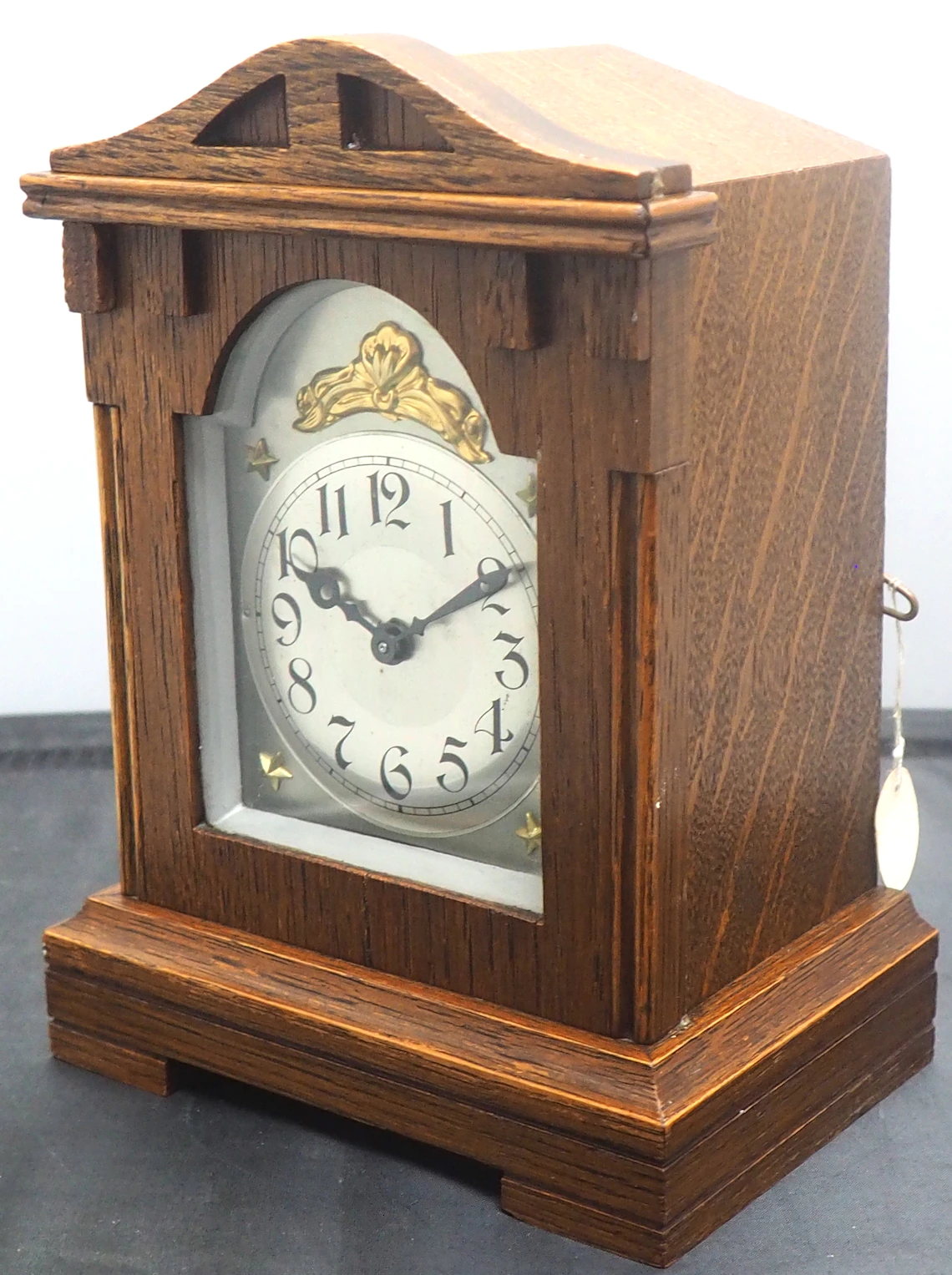

Oak Carriage Clock – Mantel Clock
£140.00
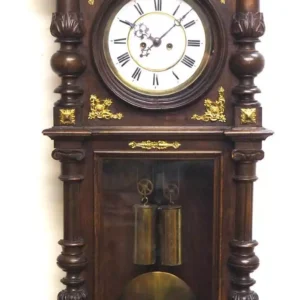
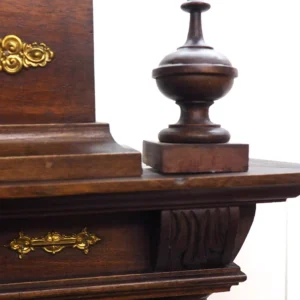
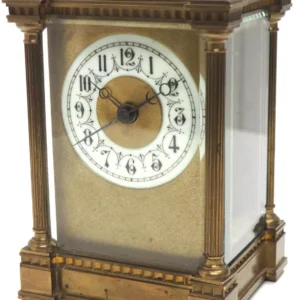
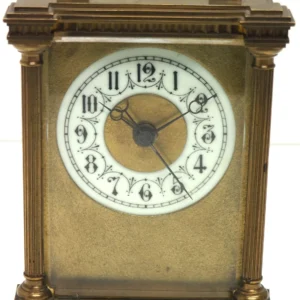
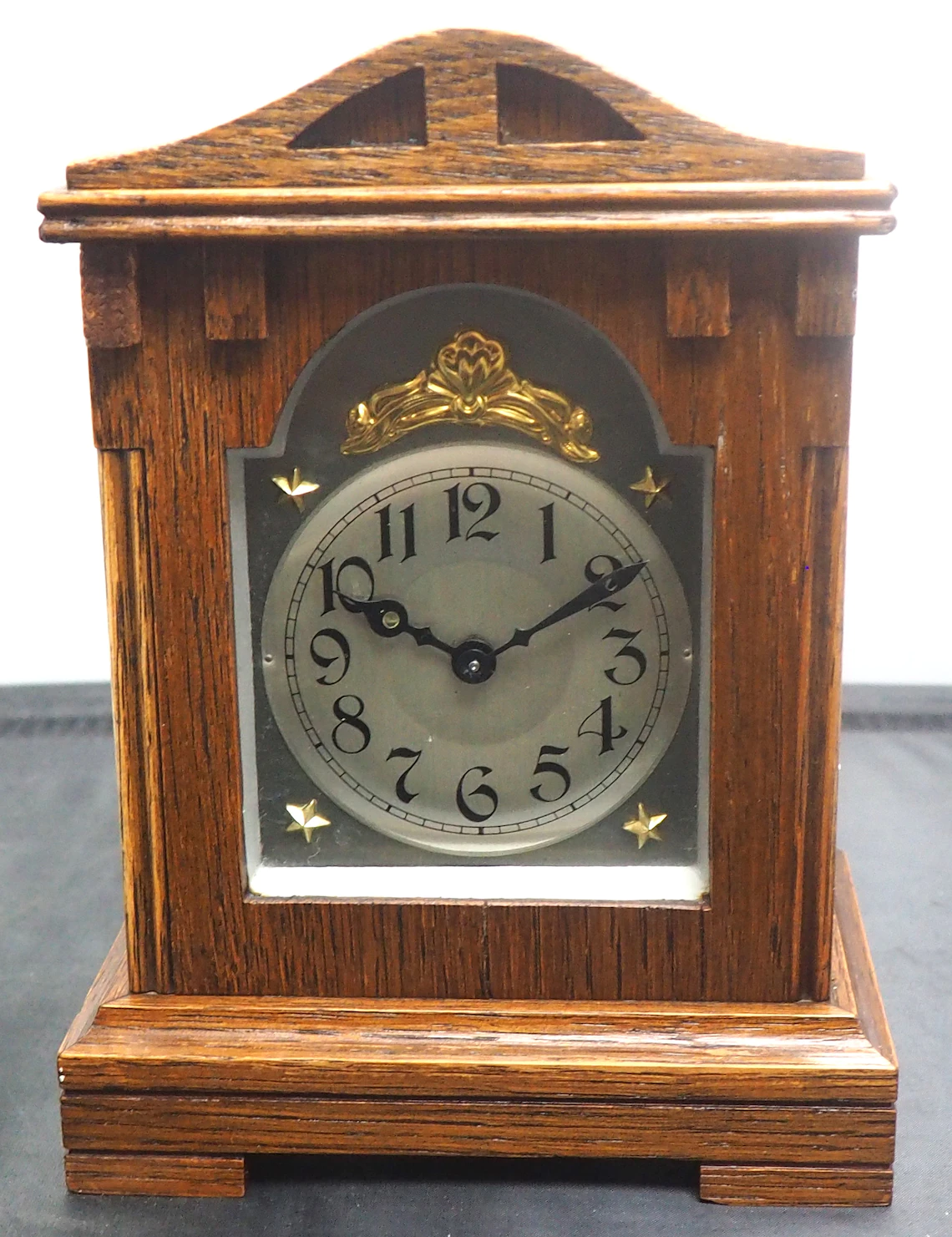
This striking carriage clock is perfect for your desk or mantel. The finely carved antique oak case frames a highly polished brass and silver-plated dial in classical style while the steel hands and curved pediment make it a classic timepiece that will always be in style.
Description
This striking carriage clock is perfect for your desk or mantel. The finely carved antique oak case frames a highly polished brass and silver-plated dial in classical style while the steel hands and curved pediment make it a classic timepiece that will always be in style.
A classical vintage clock from the 1920s
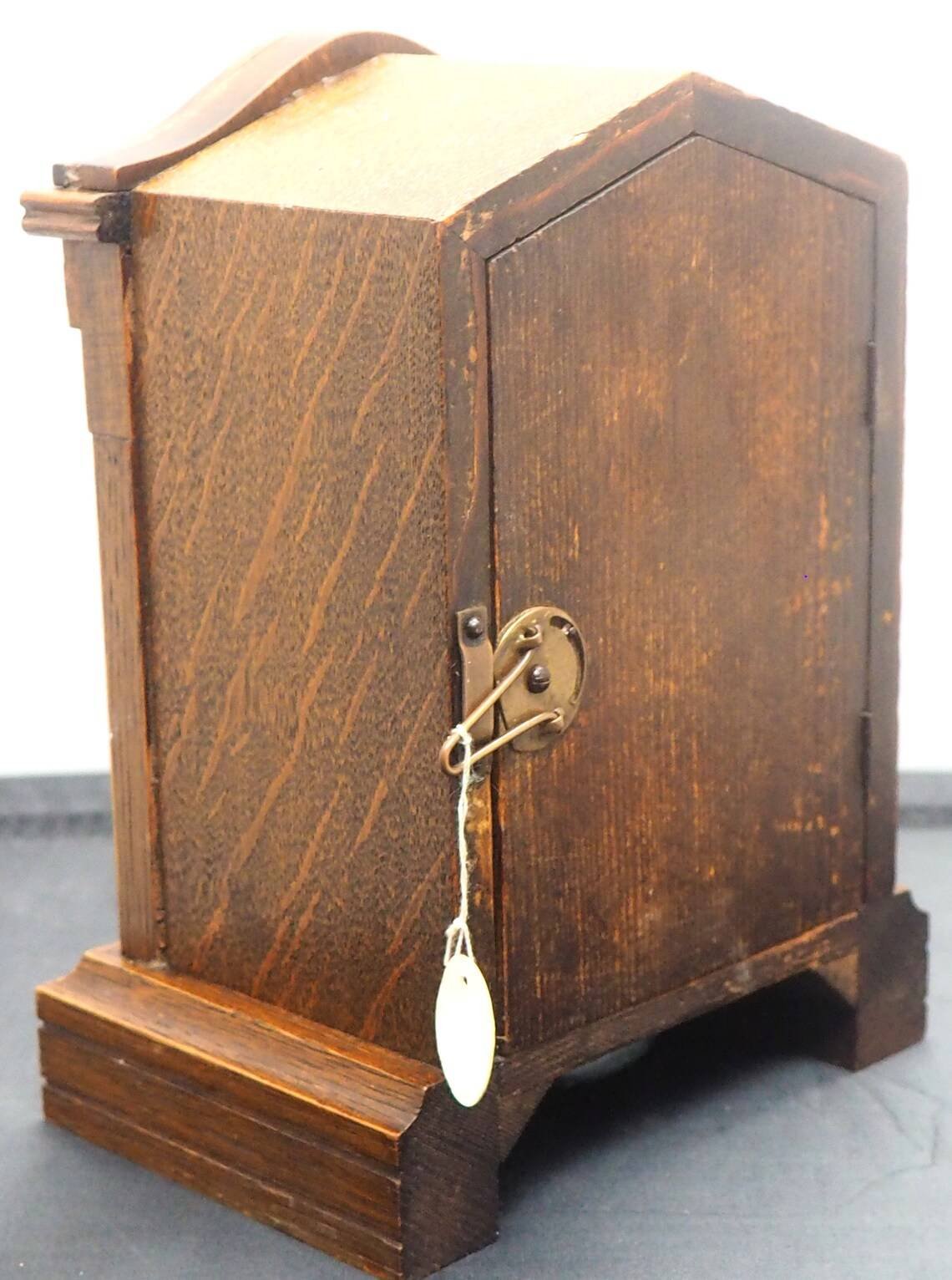
Original oak carriage clock perfectly preserved in its original wooden structure
Affordable pricing for a traditional German clock
Condition: Good
Carriage Mantel Clock
This 1920s oak carriage clock is a finely carved antique piece, in perfect working condition with a protected glass case. The beautiful steel hands and curved carved pediment top are features of the classic design. This handsome timepiece is sure to please any collector or admirer of German antiques and German clockwork.
Carriage clocks were designed in the early 18th century to be the first travelling timepiece. The majority were produced in England and France, though the design spread further, allowing men who worked on the railways to carry the time with them.
This particular carriage clock is of German descent. Since the Renaissance period, Germany has been a large player in the clock-making world, with the southern regions of Bavaria and Baden-Württemberg being an important centre for German horological skill.
How Often Do You Wind a Mantel Clock?
Much like a carriage clock, a mantel clock needs to be wound every 7–8 days — typically once a week at the same time is the optimal approach.
Carriage Clock Case Cleaning
This beautiful German carriage and mantel clock is kept in great condition, so it’s only natural you’ll want to preserve its life for many years and generations. Keeping an oak case in mint condition can be tricky — store it in a cool, dry place, avoiding damp areas and mantelpieces above a regularly used fireplace, which can cause the oak to stain, discolour or even begin to break.